
Most board-certified plastic surgeons recommend waiting three to six months after you fully stop breastfeeding before scheduling a breast procedure, since breast tissue keeps changing for months after weaning ends. At Enchanted Beauty Plastic Surgery, Dr. Erica Bartlett helps new mothers work through exactly this kind of decision, using a personalized consultation process to map out the right timeline for each patient rather than a one-size-fits-all rule.
This blog breaks down why timing matters, the signs your body is ready, and what to expect if you decide to move forward with a breast lift, augmentation, reduction, or mommy makeover after breastfeeding.
Why Timing Your Breast Procedure After Breastfeeding Matters
Breast tissue does not stop changing the moment you stop nursing. Several factors continue shifting for months after weaning, which is why surgeons build in a waiting period before recommending surgery:
- Breast tissue continues to contract and settle into its post-breastfeeding shape
- Hormone levels, including estrogen and progesterone, are still stabilizing
- Milk ducts need time to fully wind down before they can safely be altered
According to the American Society of Plastic Surgeons, it can take four to six months after weaning for breasts to contract into their post-pregnancy size and shape, if they contract at all. Operating before that process finishes makes it difficult to predict how much volume, shape, or skin laxity will remain once your body settles.
How Long Should You Wait After Breastfeeding Before Breast Surgery?
Most surgeons agree on a general window of three to six months after your last breastfeeding session, though the right timeline depends on your body and the procedure you're considering.
The American Society of Plastic Surgeons has gathered guidance from multiple board-certified surgeons on this exact question, and their recommendations generally fall into a similar range:
- Waiting at least three months after weaning is a common recommendation, since breast tissue continues to change during that time
- For breasts that are still visibly changing, some surgeons consider it safe to wait six months to a year
- Others recommend waiting up to six months after lactation has stopped so tissue can settle into its final shape
Signs Your Body Is Ready for a Post-Breastfeeding Breast Procedure
Beyond the calendar, a few physical signs suggest your body has reached its post-breastfeeding baseline. Look for the following before scheduling a consultation:
- Milk production has fully stopped, with no ongoing let-down or leaking
- Breast size and shape have held steady for at least two consecutive months
- Any breastfeeding-related swelling or engorgement has fully resolved
- Your weight has stabilized within a normal range for your body
- You feel physically recovered from childbirth and breastfeeding overall
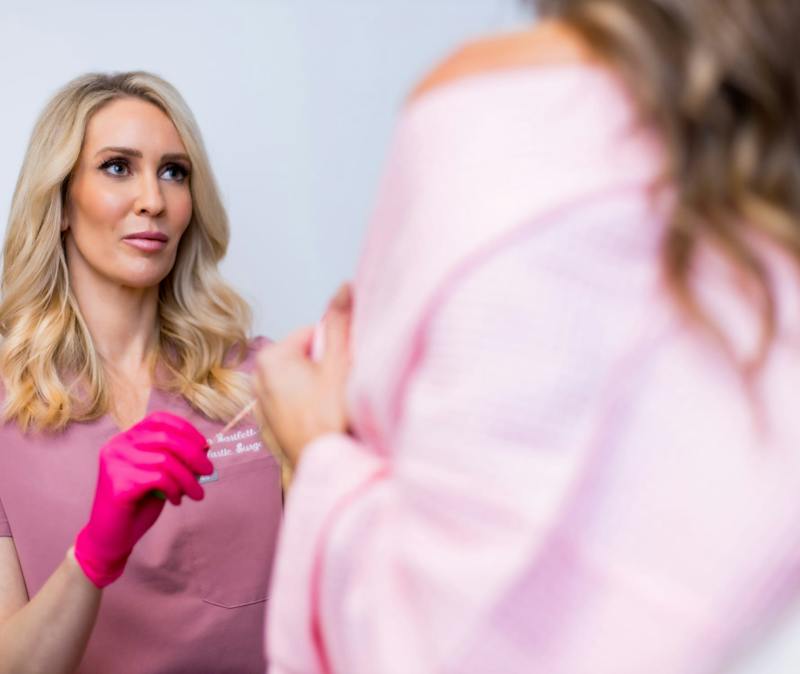
Dr. Bartlett reviews each of these factors during your consultation, along with your full medical history, to confirm that you are ready before scheduling surgery. No single sign tells the whole story on its own, which is why she looks at the full picture rather than relying on the calendar alone.
Risks of Scheduling Breast Surgery Too Soon After Breastfeeding
Moving forward before your body has settled can work against the results you want. Rushing the timeline introduces a few specific risks:
- Unpredictable results: If breast tissue is still contracting, implants placed too early may sit differently once swelling resolves, raising the chance you will need revision surgery later.
- Engorgement during healing: Breasts still producing even small amounts of milk are more prone to swelling and discomfort during recovery, which can complicate healing.
- Milk duct disruption: Operating too close to your last breastfeeding session can affect the milk ducts themselves, an important factor if you plan to breastfeed again in the future.
- Asymmetry: Breasts often settle at slightly different rates after weaning, and operating before both sides have finished changing makes it harder to achieve a balanced, lasting result.
Patience at this stage protects both your results and your investment in the procedure itself.
Breast Procedures That Address Post-Breastfeeding Changes
Once your body has stabilized, several procedures can restore the shape and volume breastfeeding may have changed:
- Breast Lift: Repositions sagging breast tissue and removes excess skin for a more lifted contour. Learn more about breast lift surgery.
- Breast Augmentation: Restores lost volume using implants or fat transfer. Learn more about breast augmentation.
- Breast Lift with Implants: Combines a lift and augmentation for patients dealing with both sagging and volume loss. Explore breast lift with implants to learn how the procedures can be combined.
- Breast Reduction: Addresses discomfort from breasts that feel heavier or larger after breastfeeding.
- Mommy Makeover: Pairs a breast procedure with body-contouring procedures, such as a tummy tuck, to address several post-pregnancy changes in a single surgical plan. Learn more about a mommy makeover.
Breastfeeding affects each patient differently. Some women notice mostly deflation and loss of upper-pole fullness, while others deal with sagging, stretched skin, or a noticeable difference between breasts.
Dr. Bartlett tailors each approach to the patient's anatomy and goals rather than applying the same template to every mother, and she will walk you through which combination best matches the changes you're seeing.
Should You Wait Until You're Done Having Children?
Many surgeons suggest waiting until you have finished having children before pursuing breast surgery, since another pregnancy or round of breastfeeding can change your results again.
Still, this is not a hard rule for every patient. The American Society of Plastic Surgeons notes that surgeons can, in some cases, safely operate on patients who plan to have more children down the road.
The decision comes down to your personal timeline and priorities. During your consultation, Dr. Bartlett will walk through how future pregnancies could affect your results, including the possibility that another pregnancy or round of breastfeeding may change your breast shape again, so you can make an informed choice about when to move forward.
Get a Personalized Timeline From Dr. Erica Bartlett
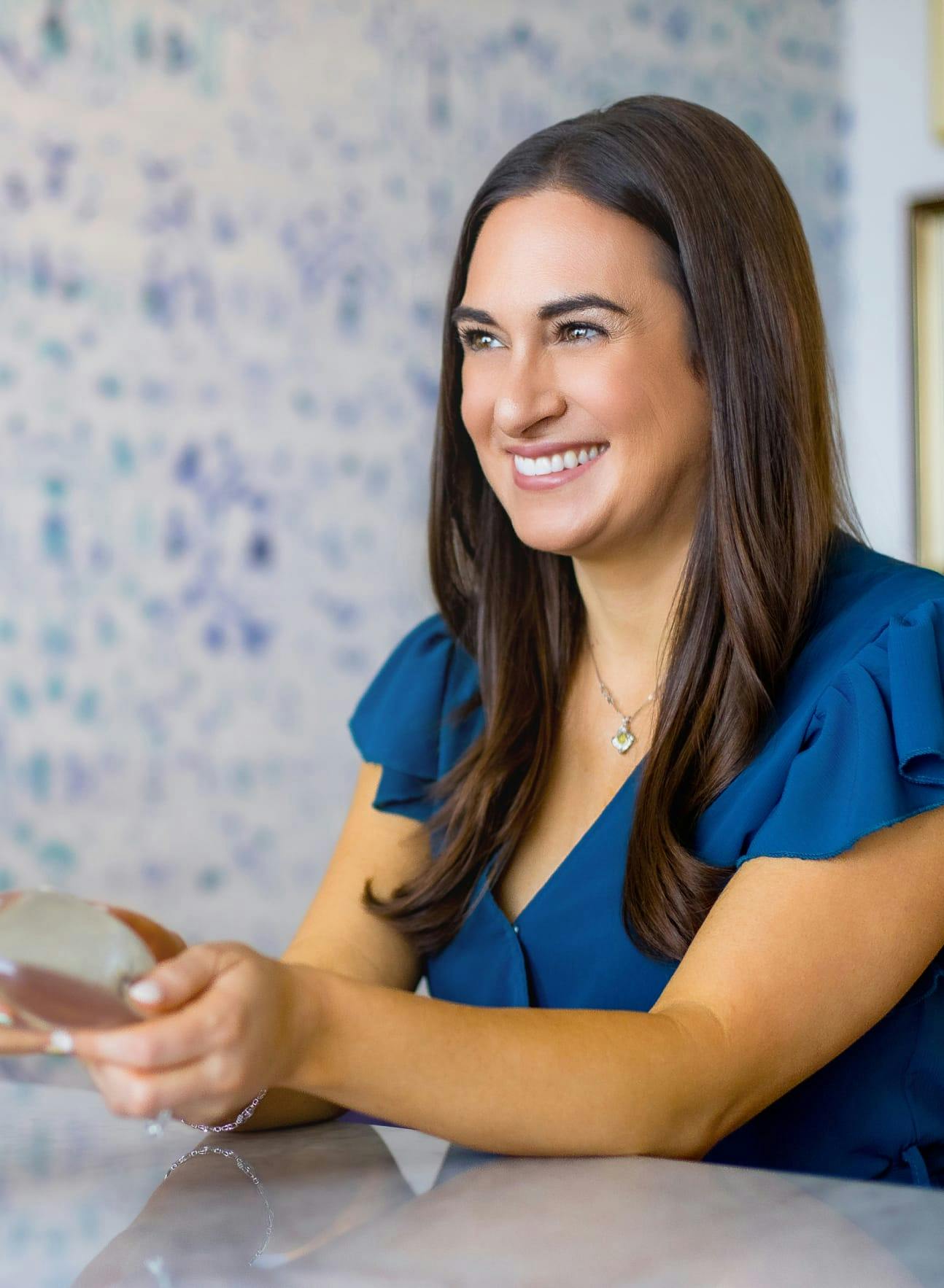
Dr. Erica Bartlett is a board-certified plastic surgeon who graduated first in her class at Texas A&M College of Medicine before completing a general surgery internship at Vanderbilt University and an integrated plastic surgery residency at Baylor College of Medicine. She founded Enchanted Beauty Plastic Surgery to specialize in breast, body, and facial procedures, with particular experience helping mothers navigate the physical changes that follow pregnancy and breastfeeding.
Every consultation with Dr. Bartlett includes a thorough, two-visit review of your breastfeeding history, current breast health, and long-term goals, so your surgical plan reflects where your body actually is today rather than a generic timeline. Patients also receive her direct line for questions throughout recovery, an approach that reflects her broader philosophy of treating every procedure as a shared decision between doctor and patient.
If breastfeeding has changed the way your breasts look and feel, you do not have to navigate the timing alone. Dr. Bartlett can help you determine whether your body is ready for a breast lift, augmentation, reduction, or mommy makeover, and develop a plan tailored to your specific goals. Schedule a consultation with Enchanted Beauty Plastic Surgery to start the conversation.
Disclaimer: This information is provided for educational purposes only and does not replace a consultation with a board-certified plastic surgeon. Outcomes, risks, and suitability vary from patient to patient.
Sources
- American Society of Plastic Surgeons, "Post-Pregnancy Plastic Surgery: What Can You Do Now, and What Needs to Wait": https://www.plasticsurgery.org/news/articles/post-pregnancy-plastic-surgery-what-can-you-do-now-and-what-needs-to-wait
- American Society of Plastic Surgeons, "Mommy Makeovers: What Women Should Know About Postpartum Surgical Procedures": https://www.plasticsurgery.org/news/articles/mommy-makeovers-what-women-should-know-about-postpartum-surgical-procedures
- American Society of Plastic Surgeons, "Better Breasts After Pregnancy and Breastfeeding": https://www.plasticsurgery.org/news/blog/better-breasts-after-pregnancy-and-breastfeeding